Machines
Aircraft
Types and machines in context — not specifications for their own sake, but how each connects to squadrons and the fields they knew.
Machines
Types and machines in context — not specifications for their own sake, but how each connects to squadrons and the fields they knew.
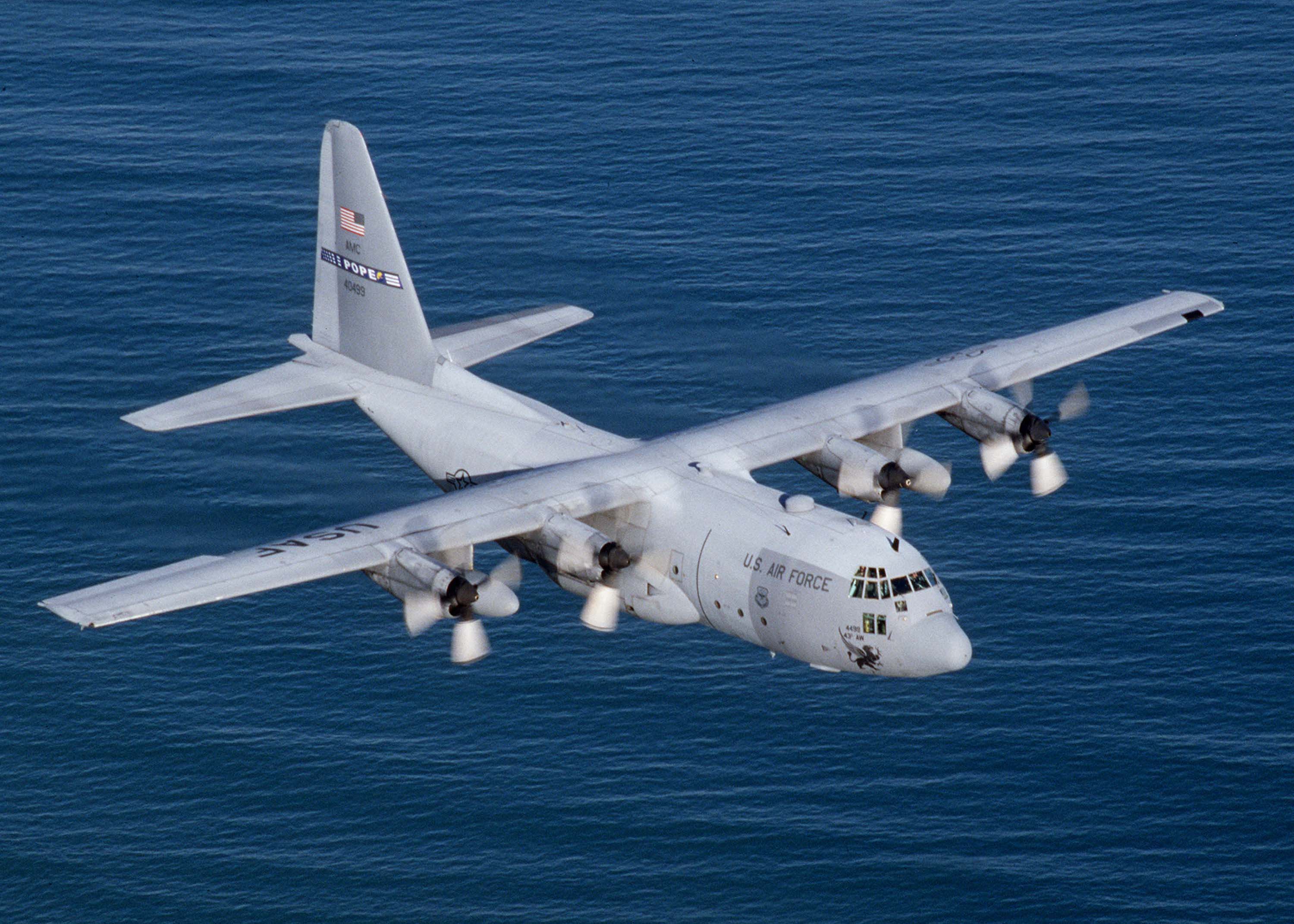
Tactical Transport • Air Drop • Medical Evacuation • Search And Rescue
Tactical Transport • Air Drop • Medical Evacuation • Search And Rescue · Lockheed Corporation
The Lockheed C-130 Hercules is one of the most successful military aircraft designs in aviation history, and the RAF's C-130 variant became the workhorse of British military air transport for over six decades. The aircraft entered RAF service in 1966, replacing a mixed fleet of older transport types including the Blackburn Beverley and Handley Page Hastings, and was based almost exclusively at RAF Lyneham in Wiltshire — the station that became synonymous with the type and bore the unofficial title of Gateway to the Forces.
The Lyneham-based Hercules fleet flew in virtually every major British military operation from its introduction. The aircraft proved indispensable during the Falklands War of 1982, operating continuously from the tiny airfield at Port Stanley and airlifting thousands of tonnes of supplies and equipment to the British forces fighting in the South Atlantic. Without the Hercules, the Falklands campaign could not have been sustained logistically at the distances involved.
The aircraft's ability to operate from rough, unprepared strips was its defining characteristic. The Hercules could land on short, unprepared surfaces — including desert strips, grass fields, and damaged runways — that no other aircraft of comparable capacity could use. This made it the first choice for humanitarian operations, disaster relief, and tactical military airlift in challenging environments. The type flew missions across the world, from the Gulf War to the Balkans, Afghanistan, and Iraq.
At Lyneham, the Hercules fleet was maintained by Nos. 30, 47, and 99 Squadrons, plus the Operational Conversion Unit that trained new aircrews. The aircraft's distinctive sound — the rumble of its four Allison T56 turboprop engines — was synonymous with Lyneham for generations of service personnel who passed through the station. The final RAF Hercules flight departed Lyneham in 2023, marking the end of an era for the aircraft type and the station alike.
As the RAF fleet retired in 2023, several former RAF C-130s have been preserved or are in the process of being acquired by museums. The aircraft's retirement marks the end of a type that had become embedded in the cultural identity of RAF Lyneham and generations of RAF personnel.
The C-130 as operated by the RAF was not armed with offensive weaponry. Its defensive characteristics relied on speed, altitude, and tactical routing rather than self-defence armament. In certain operational configurations, the aircraft could carry light defensive weapons for specific high-threat missions, but this was rare in RAF service.
C-130K: the RAF-specific version; 30 built for the RAF under licence by Lockheed and Short Brothers. C-130J Super Hercules: the modernised variant with new engines and avionics, adopted by the RAF for later operations. The RAF operated the C-130K as its primary tactical transport from 1966 until the transition to A400M Atlas, which began the phase-out of the type in the 2010s.
The C-130 was built under licence in the UK by Short Brothers of Belfast for the RAF. Over 2,000 C-130s of all variants have been built since 1954, making it one of the most produced military transport aircraft in history. The RAF was one of the largest export customers for the type outside the United States.